The electrics that decide whether harvest keeps moving
Grain handling does not usually fail mechanically. It fails at the control box.
September 8, 2026 · 4 min read
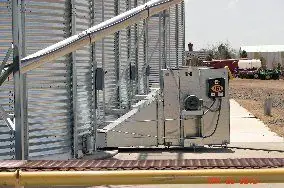
A grain site looks like a mechanical operation. Augers, legs, dryers, fans and conveyors, all steel and movement. Spend a season around one and you notice how often the thing that actually stops is electrical. A motor that will not start, a control that will not latch, a fan that trips out at the worst possible hour. The steel is usually fine. The gear that tells the steel what to do is where the trouble lives.
Where grain handling fails electrically
Most farm electrical faults cluster in a few places, and they are the same places year after year:
- Motor starters and contactors, which do a great deal of switching under load and wear out doing it.
- Overload protection that has been nudged or bypassed after a run of nuisance trips, which removes the protection and leaves the cause.
- Terminations in control panels, where vibration and heat cycling loosen connections until a joint starts running hot.
- Flexible connections to anything that moves, gets moved, or gets knocked by equipment.
- Outdoor and underground runs between buildings, which is where weather and time do their work out of sight.
Dust, weather and distance
Farm electrical installations live somewhere genuinely hard. Grain dust gets into everything and it insulates, which means gear runs hotter than its rating suggests. Moisture arrives sideways in the Panhandle rather than falling politely from above. Temperature swings work connections loose over years. And distance matters: runs between a yard, a shop and a set of bins are long enough that voltage drop is a design question, not a footnote.
None of that is exotic, but it does mean farm work is not house work done outdoors. Enclosure ratings, glanding, support and derating all have to be right, because the environment will find whatever was done casually.
What a nuisance trip is really saying
When an overload keeps tripping on a piece of handling equipment, the temptation is to treat the protection as the problem. It almost never is. A motor drawing more current than it should is usually reporting one of a few things: a bearing on its way out, a belt or auger running tight, a blockage, a supply problem such as a lost phase, or a starter that is no longer making a clean connection.
Each of those has a different fix and each of them gets worse if the trip is ignored. A lost phase in particular will destroy a three-phase motor quietly and fairly quickly. The trip is the cheap warning.
Work runs on the season, not the calendar
The practical reality of farm electrical work is that there are windows and there are seasons where nothing can stop. Any sensible plan puts inspection, replacement of tired starters and attention to hot joints into the quiet weeks, and keeps the busy weeks for the things that genuinely cannot wait. Anyone who works on farms understands that a call during harvest is not a call about convenience.
Lighting a working yard
Yard lighting is worth treating as part of the job rather than an afterthought. A site that runs after dark needs light where people actually walk and work, at the transfer points and the ladders and the doorways, not one bright pole that leaves everything else in shadow. Because it is outdoor wiring at distance, the fixtures are the easy half of the decision and the wiring is the real one.
What is worth looking at in the quiet weeks
None of the following is dramatic, and that is rather the point. It is the list that keeps a site out of trouble in the weeks when trouble is expensive.
- Open the control panels and look for discolouration, which is what a joint that has been running hot leaves behind before it fails properly.
- Check that every enclosure still seals. A missing gland, a cracked cover or a door that no longer closes squarely is how dust and moisture get their start.
- Replace starters and contactors that have been nuisance tripping rather than adjusting the protection around them.
- Walk the outdoor and underground runs where they surface, at posts, at building entries and anywhere equipment turns, because that is where damage happens.
- Test the yard and area lighting properly after dark, not by switching it on at noon and assuming.
- Check that anyone who might need to isolate a piece of equipment in a hurry actually knows where its isolator is.
A morning spent on that list in the off season is worth considerably more than the same morning spent in the middle of a run, when the only options are the fast fix and the expensive one.
Triangle Electric Company works with farmers and ranchers across the Texas Panhandle on stockyards, grain elevators and the electrical systems around them, and has answered emergency calls around the clock since long before most of the equipment on your place existed.
Triangle Electric Company, (806) 376-9950
Call (806) 376-9950More articles
Why your breaker keeps tripping, and what it is telling you
A tripping breaker is not a fault in the breaker. It is a report, and it is worth reading.
How a standby generator actually gets sized
The quote starts with the load. The model number is the last thing decided, not the first.